
Job Security Is Not the Same as Work Security

There is an interesting conversation unfolding about the future of work in Europe, and it is one that many American companies have never had to confront at the same scale. How do you move quickly in a high‑technology, high‑service economy while operating inside one of the most protective labor systems in the world? The answer is no longer theoretical. It is playing out, in real time, inside Europe’s most advanced companies.
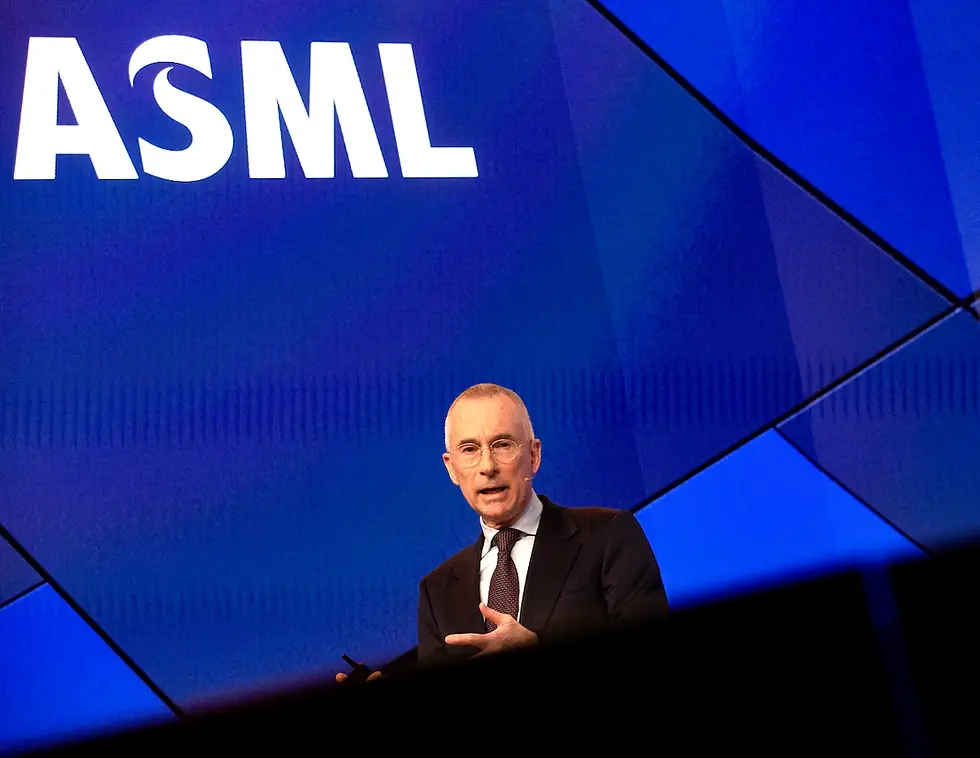
ASML, the Netherlands‑based semiconductor equipment giant and Europe’s most valuable technology firm, recently announced plans to eliminate roughly 1,700 roles, most of them in the Netherlands. The announcement landed with a thud. It came alongside record revenues, booming global demand driven by artificial intelligence, and continued expansion in the Eindhoven area. At first glance, the numbers seemed contradictory. In reality, they revealed something more unsettling: Europe’s traditional approach to job protection is colliding with the realities of scale, speed, and complexity.
Job Security Versus Work Security
For decades, Europe has optimized job security. Strong labor laws, influential unions, works councils, and regulatory oversight have helped deliver social stability and economic resilience. In countries like the Netherlands, layoffs are rare, restructurings are negotiated, and employers are expected to act as long‑term stewards of employment rather than short‑term optimizers of cost.
But job security is not the same as work security. Protecting a role does not guarantee that the work attached to it remains relevant, productive, or meaningful. Over time, many European organizations have accumulated dense layers of coordination, governance, and internal process. What begins as protection quietly turns into friction. Work slows. Decision-making fragments. Highly skilled professionals spend more time navigating systems than solving problems.
The Cost of “Work Around Work”
At ASML, that tension has become impossible to ignore. The company’s competitive advantage depends almost entirely on engineering excellence. Yet as the organization scaled, complexity scaled alongside it. Management layers multiplied. Internal coordination grew heavier. Engineers increasingly found themselves constrained by process rather than enabled by it. In a business defined by precision and speed, that is not just inefficient, it is dangerous.
This is where the idea of “work around work” becomes useful. Deloitte’s Global Human Capital Trends research describes it as the swelling mass of meetings, approvals, reporting requirements, rework, and administrative tasks that consume capacity without creating value. European companies are particularly vulnerable to this problem, not because of incompetence, but because of good intentions. Compliance, consultation, and fairness all add weight when they are not continuously redesigned.
Seen through that lens, ASML’s restructuring looks less like cost‑cutting and more like capacity recovery. The company has been explicit that it is streamlining parts of its technology and IT organization to reduce managerial overhead and free critical talent to focus on innovation. The goal is not to do less work, but to do more of the right work.
Why Restructuring Is Different in Most of Europe
That distinction matters in Europe, where restructuring is rarely purely a financial exercise. It is a social process. Works councils, unions, and regulators are not observers; they are participants with real influence. The process is slower than in the United States, but it also forces companies to articulate why change is necessary and how it serves long‑term employability rather than short‑term margins.
European restructurings fail when they rely on blunt instruments alone. Headcount reduction alone erodes trust and invites resistance. Restructurings that succeed tell a different story. They show how fewer layers can lead to better decisions, how simpler processes can restore professional pride, and how skills—not job titles—are the real unit of security.
This is pushing European organizations toward a new capability imperative. Continuous reskilling can no longer be an occasional initiative; it must become infrastructure. Organization design can no longer be revisited once a decade; it has to evolve alongside strategy. Work itself must be redesigned end‑to‑end, with explicit attention paid to eliminating friction rather than managing it.
Just as important is the relationship with labor representatives. The most effective companies are involving unions and works councils earlier, framing discussions around skills development and internal mobility rather than role preservation alone. In a labor market defined by talent scarcity, the ability to redeploy people internally is emerging as a competitive advantage.
Talent attraction sharpens the point further. The best engineers and specialists are not drawn to environments defined by bureaucracy, even when those environments offer security. They want meaningful work, professional autonomy, and systems that support rather than obstruct excellence. Any restructuring that fails to improve the lived experience of top talent ultimately fails, regardless of its financial logic.
The New European Capability Imperative
ASML is not an outlier. It is an early signal. European companies operating at the frontier of technology and services are discovering that growth without organizational renewal is no longer sustainable. The question is not whether to change, but how.
The leaders who succeed will stop treating restructuring as a defensive maneuver and start treating it as a design challenge. The objective is not fewer people, but better work. Not weaker protections, but stronger employability. Not speed at any cost, but systems smart enough to move quickly without sacrificing trust.
If Europe gets this right, its labor model will not be a constraint in the age of AI. It will be an asset: a platform for building resilient, human‑centered organizations that can scale without losing their soul.
Sources:
Financial Times – ASML forecasts bumper sales as AI boom drives chip demand (2026)
Het Financieele Dagblad – Een rupsje-nooit-genoeg ASML volgt slechts de logicavan de superstereconomie (2026)
Deloitte – Global Human Capital Trends 2025, Reclaiming Organizational Capacity
Bloomberg – ASML Plans to Cut 1,700 to Reduce Management Layers (2026)


Comments